

Last updated:
Knowing how to choose a brand name correctly is critical. It’s the one brand asset that never gets a redesign. Logos evolve, color palettes refresh, messaging repositions, but a name change means rebuilding recognition from zero and paying legal fees to exit the old one. Getting the name right the first time isn’t a creative exercise. It’s a business decision with a 10-year horizon.
This guide explains how to choose a brand name using the same psychological frameworks professional naming agencies use, plus the practical filters (trademark, domain, pronunciation) that determine whether a name actually works in market.
Why Most Founders Choose Brand Names Wrong
Most founders who need to know how to choose a brand name approach it with the wrong frame. They treat it as a creative brainstorm, generate options, eliminate the bad ones, pick a favorite. This produces names that feel right in the meeting room and fail in the market.
The problem is that “feeling right” is optimized for the people in the room, not the audience encountering the name cold. When you choose a brand name, you’re solving a communication problem for strangers who have no context about your company, no goodwill toward you, and no patience for confusion.
Professional naming frameworks invert this. Instead of starting with “what sounds good,” they start with “what job does this name need to do?”, and build the evaluation criteria around that function.

The Psychology Behind What Makes a Brand Name Stick
Cognitive science offers clear principles about which names stick and why. When you choose a brand name, understanding these mechanisms dramatically improves the quality of your candidates.
Processing fluency. Names that are easy to process, to say, spell, and remember, create a subconscious positive association with the brand. This is called the mere exposure effect: repeated easy processing feels like familiarity, and familiarity feels like trust. Names that are difficult to process create friction at every touchpoint. When you choose a brand name, processing fluency is your baseline filter.
Sound symbolism. Phonemes (individual sounds) carry meaning. Front-of-mouth sounds (p, b, t, d, i) feel fast, small, and sharp. Think “Zip,” “Bit,” “Pip.” Back-of-mouth sounds (g, k, o, u) feel large, heavy, and powerful. Think “Google,” “Kodak,” “Bosch.” When you choose a brand name, the phonetic profile should align with the brand’s positioning, not work against it.
Distinctiveness. A name is processed against a competitive set. The more a name stands out from category conventions, the stronger the initial recall, but distinctiveness needs to be calibrated. A name that’s too strange signals risk rather than differentiation. The sweet spot when you choose a brand name is unexpected but immediately plausible.
Semantic priming. Words activate networks of related concepts in memory. A name like “Stripe” primes associations of clean lines, efficiency, and speed, relevant for a payments company. Names that prime irrelevant or conflicting associations create cognitive dissonance that weakens brand positioning. When you choose a brand name, map the semantic field it activates before committing.
The 5 Brand Name Categories
Every successful brand name falls into one of five structural categories. Understanding them is essential when learning how to choose a brand name. When you choose a brand name, selecting the right category for your situation is more important than finding the “best” name within a category.
Descriptive names tell you exactly what the company does. Whole Foods, The Home Depot, General Electric. Descriptive names win on immediate comprehension but lose on trademark protection (you can’t own a generic description) and longevity (what happens when the description no longer fits?). Choose descriptive when you’re in a low-differentiation category where clarity beats distinctiveness.
Evocative names suggest a feeling, benefit, or territory without stating it directly. Amazon (vast, explorative), Patagonia (rugged, wild), Slack (efficiency, ease). Evocative names balance comprehension and distinctiveness and are the most versatile category. When you choose a brand name for a company with an evolving product scope, evocative names age best.
Invented names are constructed words with no prior meaning, such as Kodak, Xerox, Häagen-Dazs. They offer maximum trademark protection and can be built to have ideal phonetic properties, but require significant marketing investment to build associations from scratch. Invented names work best for companies with large brand-building budgets or viral growth mechanics.
Founder names leverage personal credibility and create accountability. Ford, Johnson & Johnson, Dyson. They work extremely well for luxury and professional services where personal reputation drives purchase, and extremely poorly for companies that may need to distance from the founder or scale beyond a single identity.
Acronyms and initials (IBM, GE, H&M) are almost never chosen by design at the start. They emerge when a descriptive name becomes unwieldy. Don’t deliberately choose to name a company with an acronym. The associations take decades of marketing investment to build.
How to Choose a Brand Name: A Practical Framework
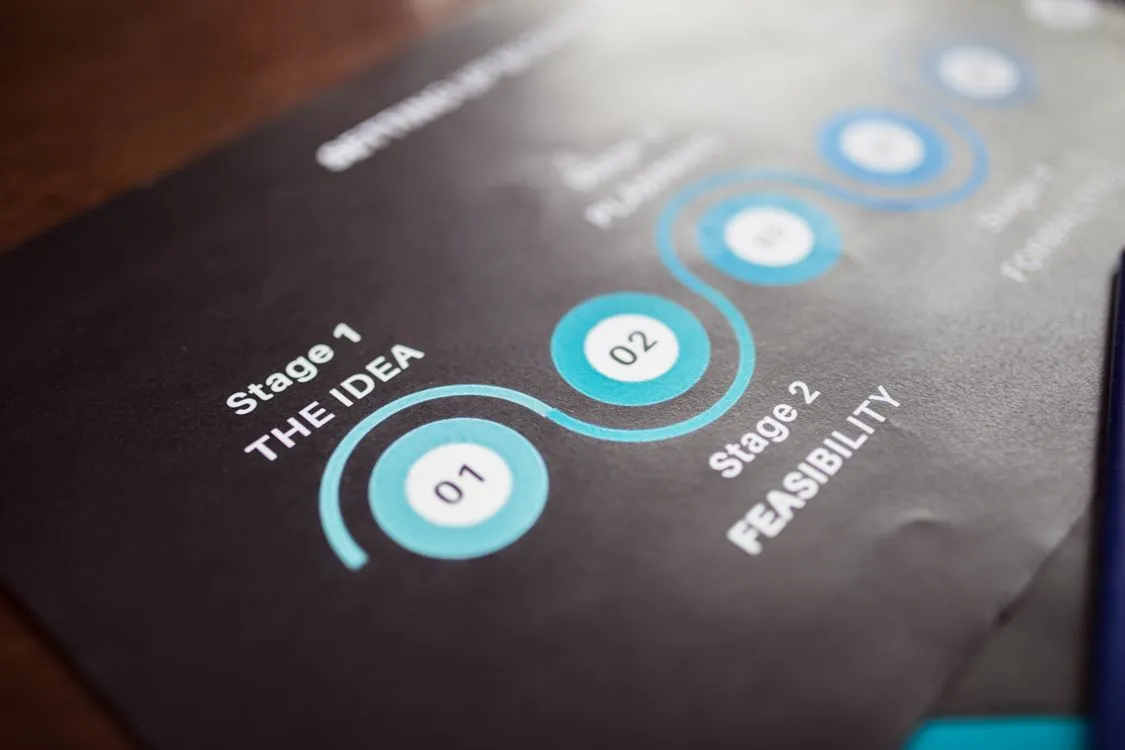
When you’re ready to choose a brand name, use this five-gate process to move from open generation to a defensible final choice:
Gate 1. Strategic brief. Before generating a single name, document: (1) the one feeling the name should create at first encounter, (2) the category the brand lives in and the naming conventions that dominate it, (3) the geographic and linguistic markets the name must work in, and (4) any hard constraints (must contain/avoid certain sounds, can’t overlap with existing IP in the portfolio). Without this brief, every naming decision is subjective.
Gate 2. Broad generation. Generate 100+ name candidates across multiple structural approaches. Don’t evaluate during generation. Pure output mode. Use etymological research (Latin, Greek, other language roots), portmanteau construction (combining two words), sound-first approaches (building from an ideal phonetic profile), metaphor mapping (what physical or natural phenomena represent the brand territory?), and cultural reference mining.
Gate 3. Strategic filter. Eliminate names that fail any of the brief criteria: wrong emotional register, sounds like a competitor, fails in secondary markets, or contradicts brand positioning. This typically reduces 100 candidates to 20-30.
Gate 4. Practical filter. Run remaining candidates through four practical tests in order: (1) pronunciation across languages, have native speakers in each target market read the name cold, (2) spelling consistency, say it aloud to three people and ask them to spell it, (3) domain availability, check exact match .com plus regional TLDs, (4) preliminary trademark screening, search USPTO (or your jurisdiction’s trademark registry) for conflicts in your class. Eliminate any name that fails a test.
Gate 5. Final evaluation. From the surviving 5-8 candidates, choose based on: which name performs best in the target audience (use a blind survey, not internal vote), which has the clearest trademark path in your class, and which allows the broadest future expansion of the brand. Avoid choosing on personal preference. The name that “feels right” to founders consistently underperforms names chosen through audience research.

Sound and Pronunciation: The Hidden Tests
How to choose a brand name that works across contexts requires phonetic testing that most founders skip. Names are heard before they’re read, in conversation, on podcasts, in word-of-mouth referrals. A name that looks great written down can fail completely in audio contexts.
The telephone test. Say the name over the phone to five people who don’t know the company. Ask them to spell it back. Spellings that diverge significantly from your intended spelling will create friction in every digital touchpoint. People searching for you will type the version they heard, not the version you chose.